
Neocaridina Care Guide
Right now there is an absolute craze in the aquatic hobby for Cherry Shrimp, otherwise known as Neocaridina davidi! These little guys are freshwater dwarf shrimp found natively in Taiwan, eastern China, the Korean Peninsula, and Vietnam and only grow to about 1-1.5 inches long at full size. They also come in a whole variety of colors - pretty much any color of the rainbow apart from pink or purple, although I’m sure there’s a breeder somewhere that’s working on it!
Neocaridina are incredibly easy to care for, at least in my humble opinion. They can handle a wide range of water parameters (pH levels of 6.5–8.5) and don’t require much tank space at all. You can comfortably keep a colony of upwards of 100+ shrimp in a 5-10 gallon tank! Feeding them is also pretty simple. The majority of their diet is composed of biofilm and microfauna, which is found naturally in a seasoned aquarium. For this reason I do not suggest starting your shrimp colony in a brand new tank. Give your tank at least 4-5 weeks to get some really yummy algae and other goodies growing for your shrimpy buddies to chow down on when they’re not munching on shrimp pellets or blanched veggies.
These guys also thrive in a wide range of temperatures, generally around 60–82°F (16–28°C). Whether or not you pop a heater in your tank is up to you. Higher temperatures will increase their metabolism, causing them to grow and breed faster but also will decrease their lifespan. Neocaridina do love stability though and do not tolerate large swings in temperature or general tank parameters. If your home goes from 72 degrees Fahrenheit during the day down to 65 degrees Fahrenheit at night, you likely should use a heater to avoid these drastic swings in temperature and keep your shrimp happy and healthy.
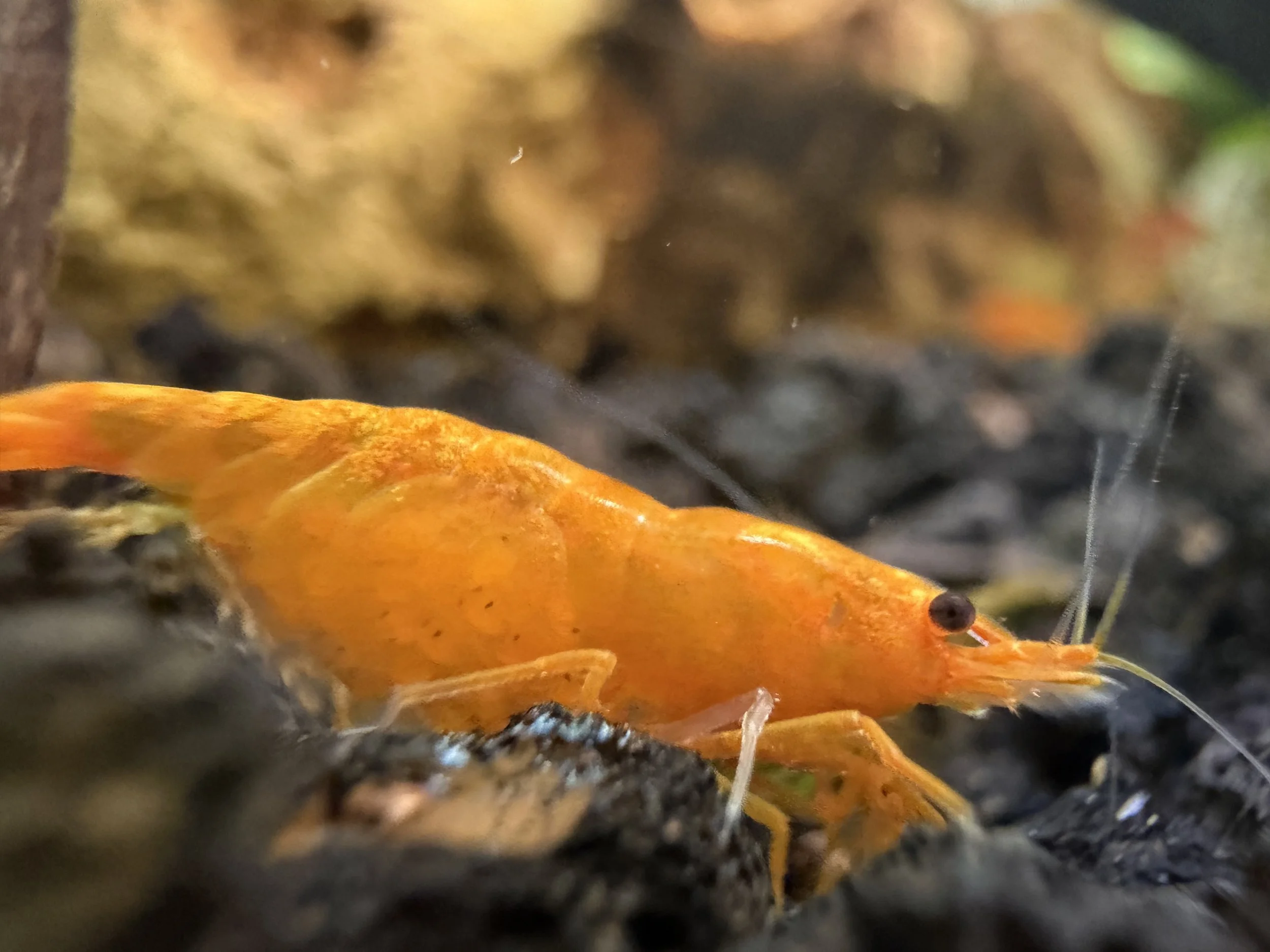
One of my Orange Neocaridina that is pregnant - the eggs/babies have little eyeballs!
Neocaridina require a GH of 6-8 and KH of 2-4 to be able to molt successfully and gather the minerals they need from the water for strong shells/exoskeletons. Without this, the shrimp can suffer from something called the white ring of death where they essentially get stuck inside their molt and end up passing away.
With keeping parameters stable, I personally do not do water changes very often for my Neos (maybe every other week and only 10-20%). I usually top up their tanks with RO/DI water and try not to stir up the substrate as this can cause an ammonia spike.
These guys breed pretty much constantly, with eggs taking about 30 days to hatch after the shrimp becomes berried. When they are close to hatching, the eggs will develop little eyes like the photo above. Babies are teeny tiny and you likely won’t see them until they’re a few days old. Many fish will take the opportunity to snack on them, so if you’re keeping fish in the same tank it’s important that you provide the babies with plenty of places to hide. A big ol’ clump of moss will do the trick!